
Why We Overspend During Black Friday: The Behavioral Economics Behind Hot Deals
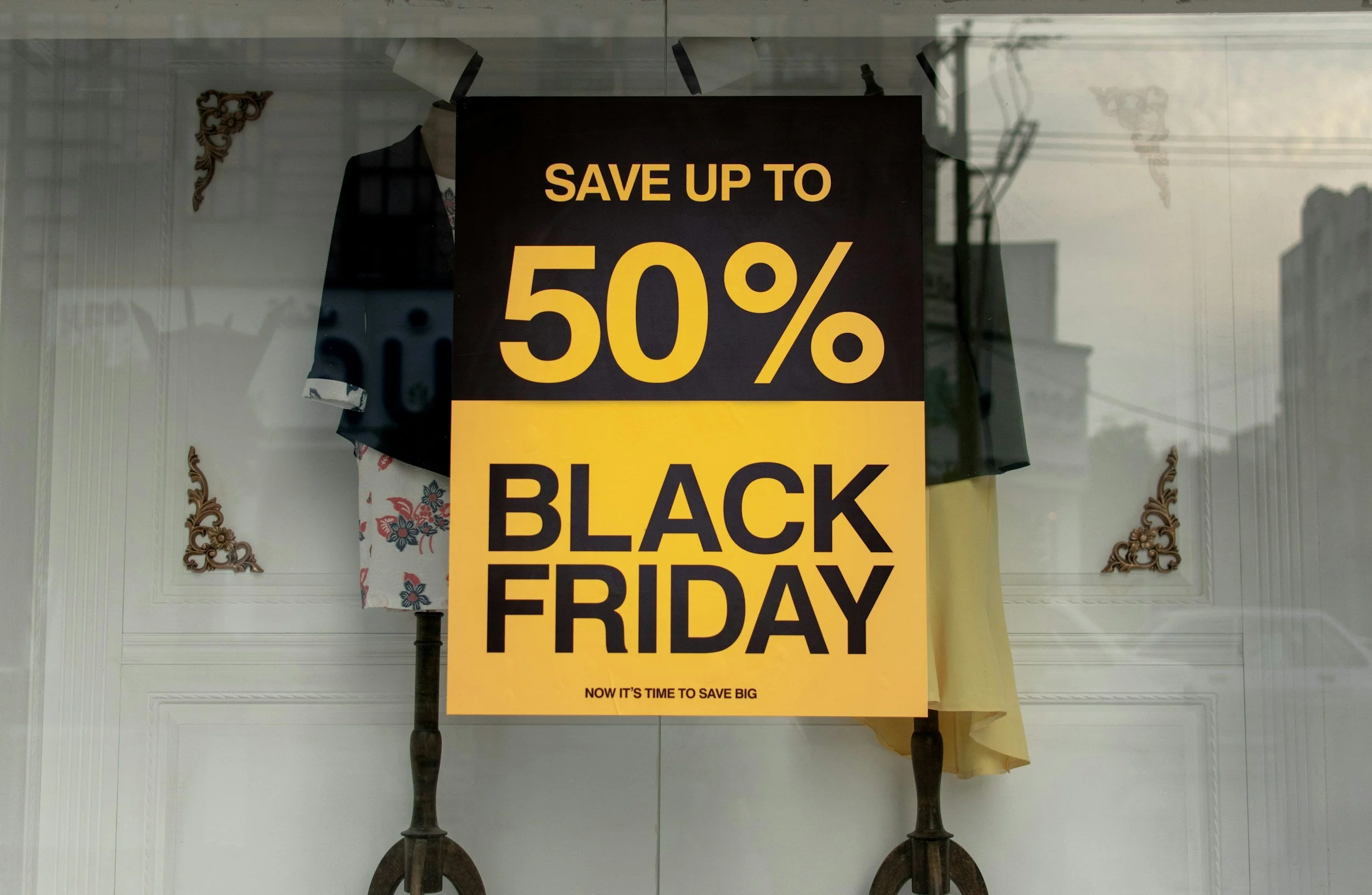
Black Friday is one of the biggest sales events of the year with consumers spending billions of dollars on their favorite stores for discounted prices. During Black Friday, consumers spend over $10 billion while shopping online, with an additional $10 billion in in-store purchases worldwide. This (along with the holiday season) accounts for around 15% of annual retail sales! But how can this be? In this article we will study how vendors make us feel like we should buy their products by offering massive discounts on their products.
What Companies Make You Feel During Black Friday
During Black Friday week, companies, whether in retail or e-commerce, use numerous marketing strategies to catch your eye and push you to buy their products. Many of these tactics include: “was/now” prices, was $100, now $60; countdown timers, “only X minutes left;” and “Buy now, Pay later” offers. All these tactics make you feel like NOW is the time to buy as many things as you can while these offers still stand. The way these companies create this feeling of rush is not accidental, it comes from numerous carefully engineered marketing tactics.
Anchoring: The Power of “Was/Now” Marketing
Anchoring is when companies show off the initial price of a product, as an anchor, and then show the discounted sales price, which to the untrained eye may seem like a massive gain. However, what most people don’t know is that this discounted price is equal to the normal retail price at other stores, but the fact that the initial price was higher than the discounted price makes the product seem more enticing.
Scarcity and Urgency at Checkout
Scarcity – when there is an insufficient amount of a product compared to the number of buyers that are interested – can highly influence people’s perception of how a product is valued. When a product is not mass produced, people tend to attribute value to that product, which creates a sense of exclusivity and urgency to have the product because, soon enough, it will sell out.
A perfect example of how scarcity is used in companies’ marketing strategies is luxury brands’ marketing. Unlike companies like Nike or Adidas that mass produce their products, fashion brands such as Louis Vuitton or Chanel release a limited amount of their product and attribute high prices to them, causing their customers to consider them as high-quality and desirable.
Loss Aversion: Buying to Avoid FOMO (the fear of missing out)
Imagine you randomly find a $10 bill on your couch, it would feel good. However, what if you found another $10 bill, but it is all crumpled and ripped in two, pretty disappointing. Even though you are up $10 randomly, the disappointment from missing out on another $10 bill overwhelms the joy of getting $10. Well, this is the principle of loss aversion, when the loss of something feels worse than the feeling of obtaining that same thing.
This is what many people experience during Black Friday, this once in a year event. The fact that you will have to wait a whole year for these deals to show up again entices you to buy everything so you don’t miss out, which would leave you with the feeling of FOMO (the fear of missing out). Additionally, seeing what you lost out on hurts more than being happy about owning that same thing.
Social Proof
Many of your favorite influencers post tens of hundreds of videos showing-off the products they bought during Black Friday. This consequentially leads many people to believe that “if they said it’s good, it must be good for me,” and they end up buying these products. This feeling can also be triggered with products that are titled “Best-Seller,” “Trending,” or "Recommended for you.”
Consequences: Overspending, Misjudgment, and Regret
It is no surprise that many shoppers fall for these tactics and end the day with their carts full. This is why Black Friday is so important to retail and e-commerce companies: everyone falls for the tactics and BUYS, BUYS, BUYS.
This highly stimulated shopping environment forces people to impulse buy, which is when people buy things they didn’t plan on purchasing due to them being exposed to the previous marketing tactics stated. Impulse purchasing can go one of two ways: either you buy something that you love and you will use frequently, or you buy too many things, many of which you will no longer like and you can’t return. These purchases can result in post-purchase dissonance, which is when one regrets what they bought after spending, leading them to feel misled and less satisfied with the products that they purchased.
Conclusion: How to Outsmart Black Friday
Black Friday overspending is not accidental, it is caused by an overly stimulated environment, carefully placed marketing tactics, and driven by behavioral economics. Strategies such as anchoring, social proof, and scarcity create an urgent environment which can distort rational decision making. However, it is not impossible to evade these manipulative tactics and leave Black Friday and the Holiday season with enough money for Christmas travel plans or other important expenses or investments.
Before Black Friday, go in with a plan instead of shopping impulsively under pressure. Set a budget beforehand and list out what you want to buy before emptying your wallet on items you never wanted. During the checkout stages, wait and contemplate whether a “deal” is actually a need. By slowing down, thinking straight, and going in with a clear mind, you can turn your Black Friday experience from a spending spree into an intentional shopping experience.
Matias Neves
Ockham Finance Contributor
Sources:
● Black Friday Statistics (2025): Sales Data by Year
● Cash-strapped shoppers opt for essentials and buy-now-pay-later services - The Washington Post
● Scarcity Marketing: How it Drives Sale & Impacts Consumer Behavior - Market MindShift
● Why Can't We Resist Black Friday? A Behavioral Economist Explains.
● 6 Ways Psychology Explains Black Friday Shopping | Psychology Today South Africa
